
Comprehensive Guide to Safety Masks: Protection for Every Environment
At Four Threads Inc, we recognise that picking fitting safety masks is a very important step to securing oneself and others’ respiratory health in many different working environments. Be it in industry, hospitals or one’s own home, safety masks have become a must in today’s time for good reasons.
Because of this, we offer lots of safety masks and respirators meeting the highest requirements with performance, comfort, and durability.
Understanding Safety Mask Classifications and Protection Levels
The different types of safety masks and respirators are distinguished by their particle filtering efficiency as well as by the kind of contaminant against which they can provide protection. You will need to use a mask that matches your specific circumstances if you want to be properly protected.
FFP and N95 Respirators
Among the worldwide generally recognised mask standards, the best known ones are the FFP1, FFP2, and FFP3 face masks of the European norm EN 149 and the N95 masks of the U.S. NIOSH classification.
FFP1 mask masks give only the simplest level of protection and have a penetration rate of about 22%. They can be used in presence of large solid non-toxic particulate matter like cement or coal dust.
FFP2 respirator respirators provide a higher level of protection by reducing the number of airborne particles by at least 92%. They correspond roughly to KN95 mask masks and KF94 mask masks for capability. These are intended for toxic and fine particulates like mold spores, resins, and metal dust.
FFP3 mask respirators are the top-level respiratory protective devices, which have a filtration efficiency of at least 98%. They protect users from the finest and most dangerous particles like lead dust, asbestos fibres, and airborne cement particles.
N95 safety mask face masks are US NIOSH approved and are counterpart to FFP2 and can filter out at least 95% of airborne particles. They are known for their efficiency and good fit.
Apart from the N95 safety mask, P100 respirator respirators offer even better filtration. They can remove not only the solid/liquid particles but also the aerosols containing oil.
Choosing the Right Safety Mask by Type and Application
The respiratory protection device you should be using is mainly determined by the job you do and the hazards you are exposed to.
Disposable vs. Reusable Respirators
Disposable face mask masks are compact, simple to use, and get thrown away right after use. In comparison, reusable respirator respirators have superior durability while the mask body can be used for years with proper care and storage, the filters and cartridges need to be changed from time to time. The popular options include half face respirator and full face respirator.
Application-Specific Safety Masks
Specialized respiratory protective equipment is required in various sectors:
- Painting respirator and spray painting mask give protection against organic vapour and paint fumes.
- Welding mask and welding PPE protect the welder from inhaling harmful fumes and particulates.
- Chemical vapour respirator and industrial safety masks are indispensable while handling acids, chemicals, and solvents.
- Woodworking dust mask and construction dust mask Mainly filter out wood dust, silica, and other particulate matter generated during construction.
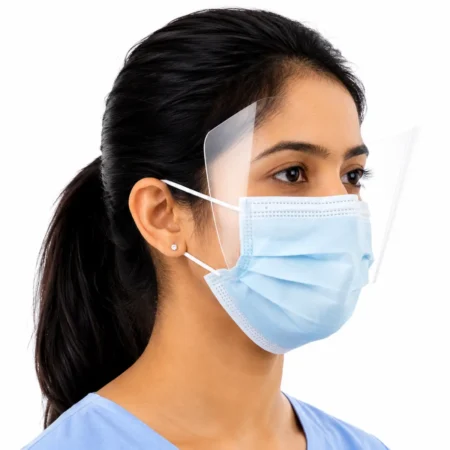
- Healthcare surgical masks and pharmaceutical face masks can be a physical defense against pathogenic agents – their use is mandated in clinics and hospitals.
Key Features for Comfort and Performance
To motivate workers to put on masks and keep them on, manufacturers add most of these features nowadays:
- Respirators made with low breathing resistance face masks do not tire the user, even when worn for extended hours.
- S-curve silicone masks, sticky gel or foam padding, and masks fitted with adjustable head straps are a few examples of devices allowing the perfect adjustment of the mask to the face shape.
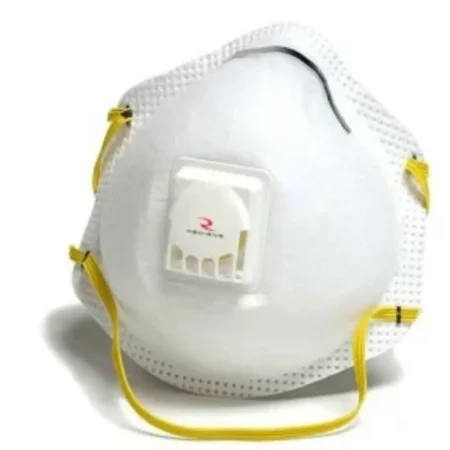
- Devices with valves for exhalation reduce the discomfort of breathing through the mask that accumulates during heavy work or warm weather — these are called valved respirator systems.
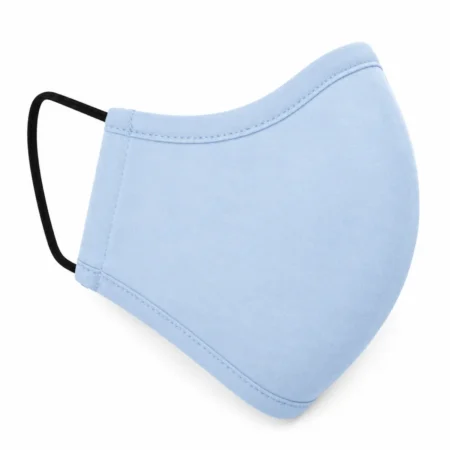
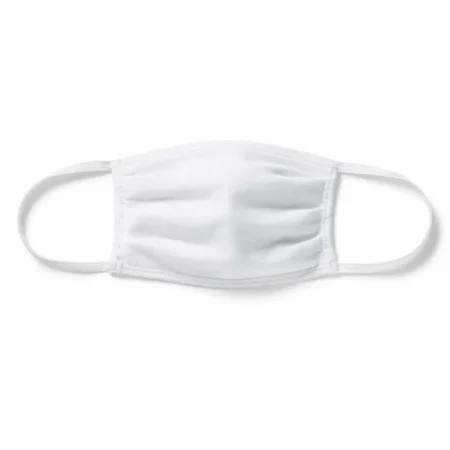
- Foldable face masks in flat shape (flat fold respirator) and hard shell face masks in cup shape (cup style respirator) are the two main models preferred by most of the users.
- Breathability and moisture wicking properties (moisture-wicking mask) contribute to a mask user’s happiness and enhance the chance of his compliance with the wearing of the mask.
Certifications and Standards: Ensuring Quality and Safety
NIOSH approved masks (NIOSH approved mask) are certified by the National Institute for Occupational Safety and Health – NIOSH, USA.
CE marking on a safety mask (CE certified safety mask) is the sign that it meets the requirements of European health, safety, and environmental protection legislation.
Certified to EN 149 certified by showing compliance with the European standard for filtering half masks.
Standard EN 14683 surgical mask applies to surgical face masks of medical grade.
Compliance with IS 9473 compliant indicates that respiratory protective devices meet Indian standards.
General safety and respirator selection under OSHA compliant respirator rules are part of workplace safety and health programs of the USA and are enforceable by law.
For masks to be used in healthcare, they have to be approved by the FDA approved face mask (US Food and Drug Administration).
Selecting the Right Filter or Cartridge System
The performance of a reusable respirator system is largely influenced by the choice of filters or cartridges.
- Particulate filter mask masks solid and liquid aerosols including dusts, mists, and fumes.
- Organic vapour cartridge provides protection against exposure to organic gases and vapours like those of solvent and paint.
- Combination cartridge respirators protect simultaneously against particulates and gases/vapours.
- Activated carbon mask are good at adsorbing chemical gases and odours.
- HEPA filter mask capture 99.97% of particulate matter.
- The A1P2 filter protects from organic gases and particulate matter at the same time.
- Meltblown filter mask is a main layer of filtration in a disposable mask.
- A pre-filter respirator can be added using attachments to extend cartridge life.
- Oil mist filters are designed for oil-based aerosol environments.
Safety Masks for Every Industry and Workplace
Our construction safety mask products include protection against dust, silica particulate, and other construction hazards.
Manufacturing respirator solutions protect workers from industrial dust and fumes.
Chemical industry respirator devices protect against hazardous chemicals and vapours.
Mining dust mask filters coal dust and mining particulates.
Emergency escape mask is designed for sudden hazardous exposure situations.
Healthcare face mask provides protection against biological hazards.
Understanding Respiratory Protection Technologies
Negative-Pressure vs. Positive-Pressure Respirators
With negative-pressure respirators, contaminants are inhaled as air is drawn through the filter. In contrast, positive-pressure systems like powered air-purifying respirators (PAPR) push purified air into the mask, offering higher protection.
Frequently Asked Questions
1. What is the use of a safety mask?
Air-purifying particulate respirators and masks function mainly by trapping the particles and blocking droplets. At the same time, by using a mask or respirator correctly, you can minimize your exposure to harmful respiratory hazards and protect yourself from various respiratory hazards including dust, air pollutants, chemicals, gases, vapors, fumes and harmful microorganisms.
2. What is the best face mask for safety?
The CDC points out that N95 masks provide the most significant level of protection among disposable face masks. Though, the best mask is one that you wear properly and consistently, making sure it has a good seal and fit.
3. What are the differences between FFP1, FFP2, and FFP3 masks?
These are European FFP (Filtering FacePiece) classifications. FFP1 masks filter 78% of particles (e.g. large solid particles like cement). FFP2 masks filter 92% of particles (e.g. fine and toxic particles like mold). FFP3 masks filter 98% of particles (e.g. very fine particles like lead and asbestos).
4. What is a Type IIR face mask?
A Type IIR face mask is the highest type of surgical mask under the EN 14683 standard. It has antibacterial filtration efficiency (BFE) > 98% and at the same time is resistant to liquid penetration through it as it is made of non-woven fabric and designed with three layers.
5. What is the difference between a valved and non-valved mask?
The main difference between valved and non-valved masks is that valved masks have a one-way exhalation valve while non-valved masks are without it.
6. How do I choose the right respirator for my workplace?
First, you need to figure out what type of hazard you are dealing with (particulates, gases/vapours, or both). Next, you should ascertain whether respiratory protection is necessary by comparing exposure levels to occupational exposure limits (OEL) or permissible exposure levels (PEL).
7. How often should I replace filters and cartridges?
You should replace filters and cartridges in your respirators when you notice or taste the contaminants or if you get irritation in your eyes, nose, or throat. Facepieces need to be also cleaned after each use whilst disposable masks should be discarded when they become damp or damaged.
8. Are half-mask respirators reusable?
Half-mask respirators are Yes reusable and designed for a long service life when properly maintained. While the mask shell can last for years, the filters and cartridges need to be replaced periodically due to exposure and environmental conditions.
9. What does P100 mean on a respirator?
The P100 rating, assigned by NIOSH, means that the respirator filters are at least 99.97% efficient in trapping all types of particles including those found in oil-based aerosols. Because of this, they offer the highest level of particulate protection.
10. Why is it important to fit test respirators?
Fit testing is done to confirm that the respirator makes a complete seal with the user’s face, so no contaminated air leaks in. For the respirator to deliver its rated level of protection, a good fit is crucial. The seal should be checked before every use and adjustable straps are helpful in obtaining a fit that is both comfortable and secure.
11. What are safety standards that a safety mask should meet?
Safety masks come with many certifications. You can consider masks that are NIOSH-approved for the US, CE-certified for the EU, compliant with the EN149 standard for filtering half masks, compliant with EN 14683 standard masks for surgical masks, and IS 9473 compliant masks for India, and masks approved by the FDA.
12. Can disposable face masks be used in industries?
Disposable face masks like N95 respirators, FFP2, and FFP3 are commonly used for industrial applications where protection from dust and particulates is needed. For situations where gases, vapours, or very toxic substances are present, it is recommended to use reusable respirators equipped with suitable cartridges.
13. What type of mask should I use for painting or spray painting?
Respirators with organic vapor cartridges or combo cartridges that protect against both vapors and particulates are what you should use for painting and spray painting. According to the exposure and the need for eye protection, half-face or full face respirators can be used.
14. What is the difference between Dust Mask and Respirators?
A dust mask is designed to be comfortable for the wearer and is made for nuisance dusts. Dust masks are not NIOSH-approved and hardly provide you with any protection. Respirators are the ones that have NIOSH-approval and undergo rigorous testing to ensure they meet specific filtration efficiency standards and thereby genuinely protect the wearer from hazardous particulate matters in the air.