The global apparel industry often finds consumers confused by overlapping terms in knitwear. Industry data indicates that the market for sweaters and pullovers is growing steadily, with many online searches focused on understanding the difference between pullover and sweater.
For Indian consumers, where fashion terms are influenced by both British and American English, this confusion is even greater. In cities like Bengaluru or Mumbai, asking for a “jumper” in a store can mean confusion, while requesting a “pullover” may result in being shown a garment identical to a sweater. This article aims to clarify these terms, helping you know what you are purchasing and how to style it.
What Is the Difference Between a Sweater and a Pullover?
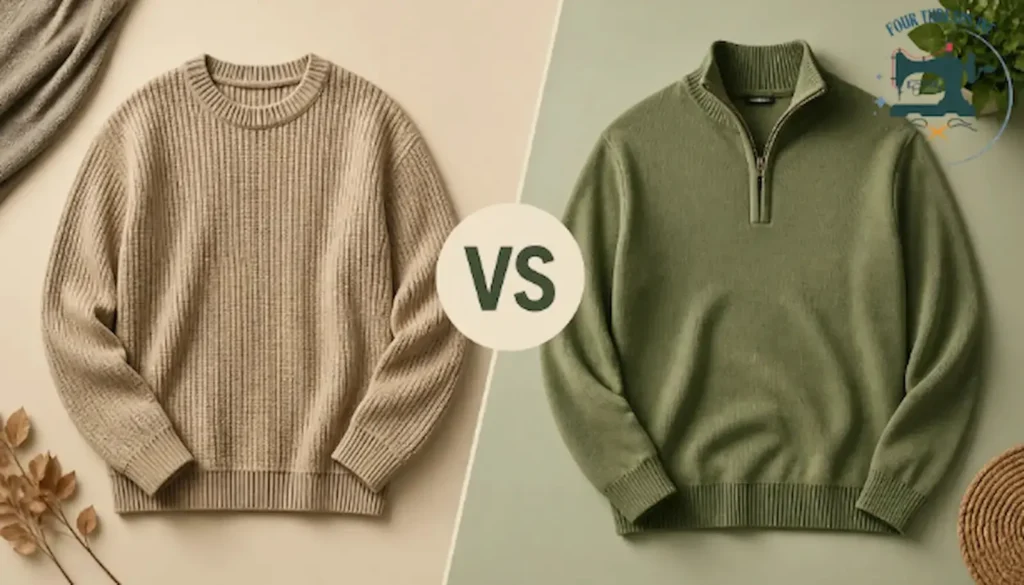
A pullover is a specific kind of sweater. The term “sweater” refers to a broad group of garments, while “pullover” describes a particular style within that group. The main distinction is the closure: sweaters may include cardigans (with an open front), turtlenecks, or pullovers.
By definition, a pullover does not have a front opening—there are no buttons or zippers—and it is intended to be pulled over the head. This difference is important for shoppers seeking certain styles, since the construction affects both appearance and how the garment fits or can be layered.
Why Is It Called a Pullover? The Etymology
The name “pullover” is simply a literal description. If you wear a jacket or cardigan, you wear it with the opening at the front, unzipped, and unbuttoned, and then fasten it up. Still, with a pullover you pull the garment over your head.
The name simply refers to the way in which the user puts on the piece. Early knitwear referred exclusively to thermal clothing that was purely utilitarian in purpose, until knitwear became the new fashion, at which point the nomenclature was accepted.
Many use jumper as the preferred term in British English, whereas in American English, sweater, and pullover are interchangeable. Up until recently, sweater was the favored term in Indian English as well, but pullover is now used to refer to the item that is worn with a closed neck.
What Does “Pullover Sweater” Mean?
“Pullover sweater” is technically somewhat redundant, but a lot of the time you’ll hear it anyway. As a pullover is a form of sweater, then you’ve just said “pullover sweater” in the same way you would say “sedan car.”
It is a compound noun used to differentiate the item from a cardigan or a zip-up sweater. The term is often used on a label or website – it generally describes a conventional knitted top, featuring full-length sleeves, a crew neck or V-neckline, and no button or zip closure in the front. It is fundamental in wardrobes of both men and women.
The Global Language of Knitwear: Jumper vs Sweater vs Pullover
Region and dialect variation are the main culprits for this confusion. As you go through international fashion blogs or shop online from various countries and regions, you will see this piece of clothing called differently in different places. That’s the reason this query “sweater vs pullover” is so common.
An American will call a sweater, a British will call a jumper, a senior citizen a pullover, an Indian too will follow the British style and fashion but Americans will still carry a lot of influence on them.
Regional Terminology Breakdown
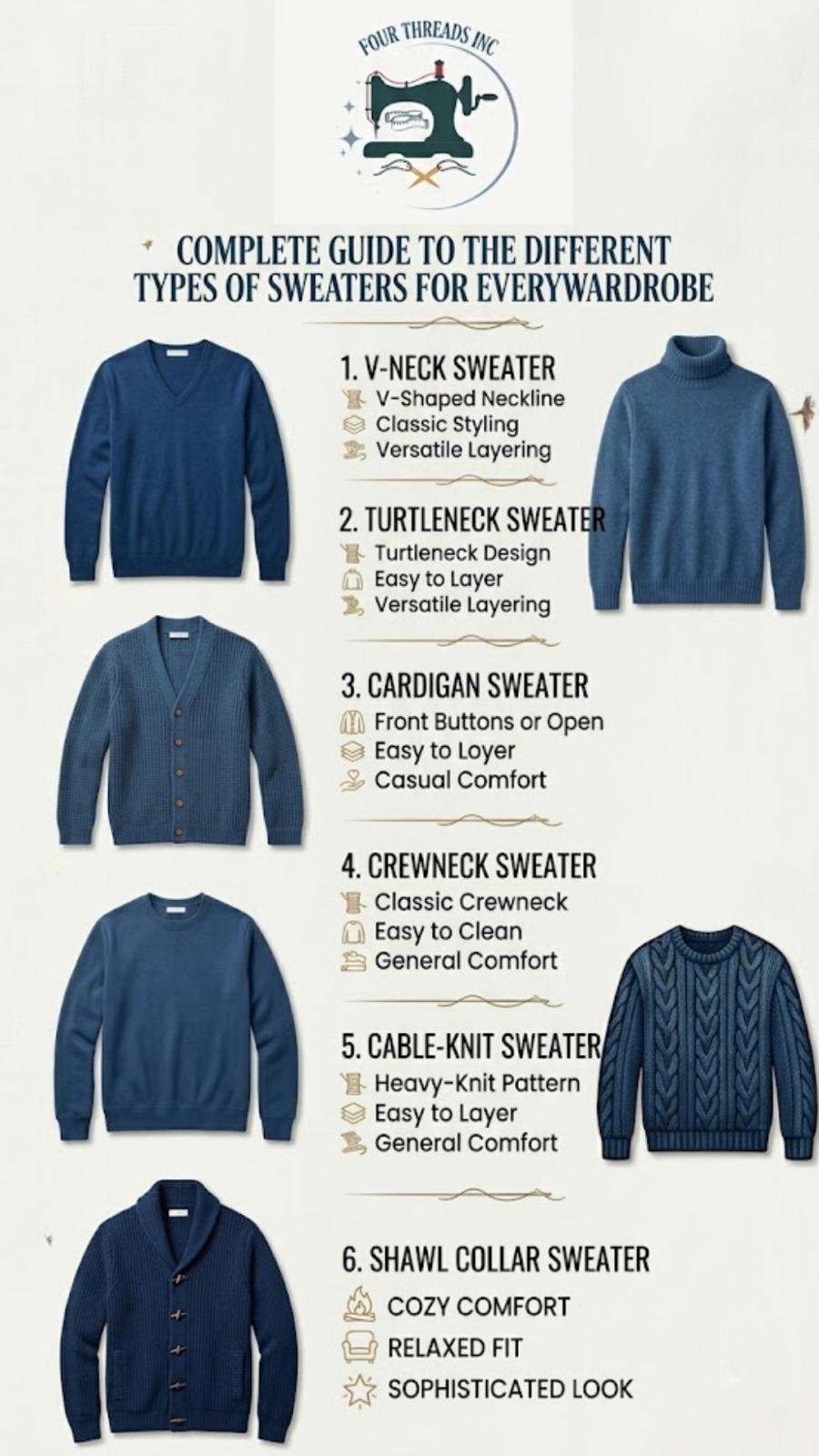
1. Sweater: top written term in North America for a sweater of any kind, such as a pullover, cardigan, or turtleneck sweater.
2. Jumper: The regular British word for what Americans call a sweater. But Americans sometimes use the word “jumper” for what the British would call a pinafore, which is a sleeveless dress worn over a blouse.
3. Pullover: This is a very particular and global term. Referring to the construction (no front opening). It is a common interchangeable to the word sweater in the United States, but this is not true for the UK (in the U.K. it refers to a sweater you have to pull over your head).
4. Jersey: In some regions of the United Kingdom, Ireland, and South Africa, the term jersey is another word for a sweater or pullover. In worldwide sports parlance, it means a sports shirt.
Pullover vs Cardigan: The Closure Conflict
The main difference between a pullover and a cardigan is that both are types of sweaters, but they function differently. A cardigan is an open-front garment, usually fastened with buttons, a zipper, or a tie, making it easy to layer over shirts and allowing for temperature regulation.
In contrast, a pullover lacks this opening, offering a cleaner look but less versatility for adjustability. In climates like India’s, where mornings are chilly and afternoons warmer, cardigans are more useful, while pullovers are better for consistently cold or air-conditioned settings.
Sweater vs Cardigan: Key Differences
1. A cardigan features a front placket with fasteners, while a pullover has a closed front.
2. Styling: Cardigan can be open and paired with tees or kurtas for layering, pullovers have to be at the top or layered over a thin layer.
3. How formal or casual are they? Both styles may be worn in a more casual setting, but a fine-knit pullover is smarter in appearance than a chunky cardigan. Cashmere Pullover – a timeless piece of smart casual wear.
Sweater vs Sweatshirt and Hoodie: Material Matters
Sweaters and sweatshirts are often confused, but they differ in material and style. Sweaters are made from knitted yarns like wool, cotton, cashmere, or synthetic blends. Sweatshirts are produced from woven or knit cotton fleece, typically featuring a brushed interior for added softness.
Hoodies are simply sweatshirts with a hood attached. On formality, hoodies are considered the most casual, followed by sweatshirts, with pullovers or sweaters being the most formal. If you are searching for a “loose sweater for men,” you may actually want a sweatshirt or a relaxed-fit pullover, according to the fabric’s weight and texture.
Fit and Style Guide: Loose Sweater for Men and Pullover for Women
The Bottom Line is Fit. What you see as “sweater vs pullover” may, in fact, be a discussion about fit: “What fit works for me?”
1. Loose Sweater for Men: The demand for loose knitwear has led to a craze for ‘loose sweaters’. Loose men’s sweaters or pullovers tend to be comfortably cut in the chest and sleeves. Seek out drop-shoulder seams, heavy yarns such as chunky wool or fleece, and pairing them with jeans and trainers is a contemporary casual streetwear style.
2. Pullover for Women: A women’s pullover can be as short as a crop top or as long as a tunic. A pullover for Women can be a slim-fitting, ribbed-knit top to pair with high-waisted trousers or a big, oversized pullover for women to wear as a women’s dress with tights. Important—the neckline! Crew necks are relaxed, but V-necks and turtlenecks can be appropriate for work. Merino wool is a perfect choice for women’s pullovers—they’re warm but super lightweight.
What Is a Pullover? A Definition and Buyer’s Guide
If you are still wondering “what is a pullover”, then here is the easiest definition – a pullover is an upper body clothing that you wear by pulling over your head without a front button or zipper (though there might be buttons on the cuffs).
Pullovers will have long sleeves (but sleeveless designs called tank tops or vests also exist). You also need to check the gauge or fabric thickness while picking a pullover – finer gauge (thin yarn) is better to wear under a blazer, chunky (thick yarn) is for warmth and casual attire. Accents of cotton and acrylic blend are good for India’s light winters whereas merino wool or cashmere is for more warmth.
Pullover vs Cardigan vs Sweater: A Quick Comparison
| Feature | Pullover | Cardigan | Sweatshirt |
| Front Opening | No | Yes (Buttons/Zip) | No |
| Material | Knitted Yarn | Knitted Yarn | Cotton Fleece |
| Formality | Smart Casual | Casual to Smart | Casual |
| Layering | Over t-shirts | Over anything | Over t-shirts |
| Ease of Wear | Must pull over head | Easy open/close | Must pull over head |
The Final Checklist: Sweater vs Pullover Decoded
To sum up, to distinguish the key differences and make it a snap for you to choose:
1. All pullovers are sweaters, not all sweaters are pullovers.
2. Pullovers don’t open in front, whereas cardigans do.
3. Sweaters are of wool, cotton, cashmere Sweatshirts – cotton fleece.
4. “Jumper” is UK, “Sweater” is US.
5. Fit is everything: Opt for a loose fitting sweater for a more casual look and a slim fit pullover for a sharp, more tailored appearance.
Shop Knitted Clothes Online at Four Threads Inc.
Knitting is our ultimate love and passion and we know it is not always easy to find the kind of knitwear you want. That is why our collections have everything from the cosiest loose sweater for men to most stylish pullover for women – just so you do not have to compromise between style and comfort. We help you bridge the gap between foreign terminology and Indian fashion needs!
FAQs
Is a pullover a sweater? Yes, by definition most of the time, a pullover is a sweater. The word “pullover” refers to a type of sweater that has no opening in the front, rather than the more generic term “sweater” which covers a wider range of knitwear, like cardigans.
“Jumper” is used mainly in British English to refer to what North Americans call a sweater. The word likely comes from the Old French ‘jupe,’ which means a loose jacket or tunic. This is a regional dialect preference.
Yes, a fine-knit pullover in a dark color such as navy or charcoal, when paired with a collared shirt and tailored trousers, is suitable for some semi-formal and smart-casual occasions. Skip patterned or chunky pullovers for formal events.
Where they differ is in the fabric. Sweaters are constructed from knitted yarn (wool, cotton, etc.) and have a more refined appearance. Sweatshirts are made of cut-and-sewn cotton fleece and give a more casual appearance. They’re often worn for sports or as loungewear.
Most pullover garments are long-sleeved, but that is not a requirement – the sweater just needs to be pulled over the head. Sleeveless pullovers (sometimes called sweater vests or tank tops) also exist, but are not the norm.
Leave a Reply