Have you been in a situation where you have bought a gorgeous sweater for yourself from the mall, and once you wear it, you get an itchy feeling, the shape changes, or it just turns out to be freezing cold?
The fact is, a fabulous sweater has nothing to do with the store, the style, or the price – it is about the sweater fabric. Find out what type of sweater fabric will be the best for you this winter season as the North Indian temperatures dip, keeping you warm and comfortable. Here’s everything you need to know about sweater cloth material.
What Is a Sweater Fabric? Understanding Your Knitwear
Sweater fabric is a knitted textile that’s created by looping yarns together to form a flexible fabric. Versus woven fabrics, sweater fabric traps air in its looped structure providing insulation that keeps your body heat in.
The type of fiber, the raw material spun into yarns, is what ultimately makes or breaks a sweater when it comes to its warmth, softness, and ability to stand the test of time.
The Core Question: Which Fabric Is Best for Sweaters?
There’s no one “best” fabric – the best one is whichever works best for you, your climate, and your budget. If you want the warmest possible fabric in a very cold climate then wool is king. If you need something for a cold but not frozen climate, or if you have sensitive skin, then cotton and blends work well.
Yarn and Knit Structure: The Other Side of Sweater Fabric
It’s all about what happens to the fiber, after that the spinning of the yarn and the knitting of the fabric are important, too: worsted yarn is combed finer and smoothed, producing a sleek, durable fabric for a fine sweater, where woolen is carded producing a fuzzy, lofty, warmer fabric. Knit structure: like Hacci, a very soft knit loosely woven, or Jacquard, which creates complex patterns.
Wool: The Undisputed King of Warmth
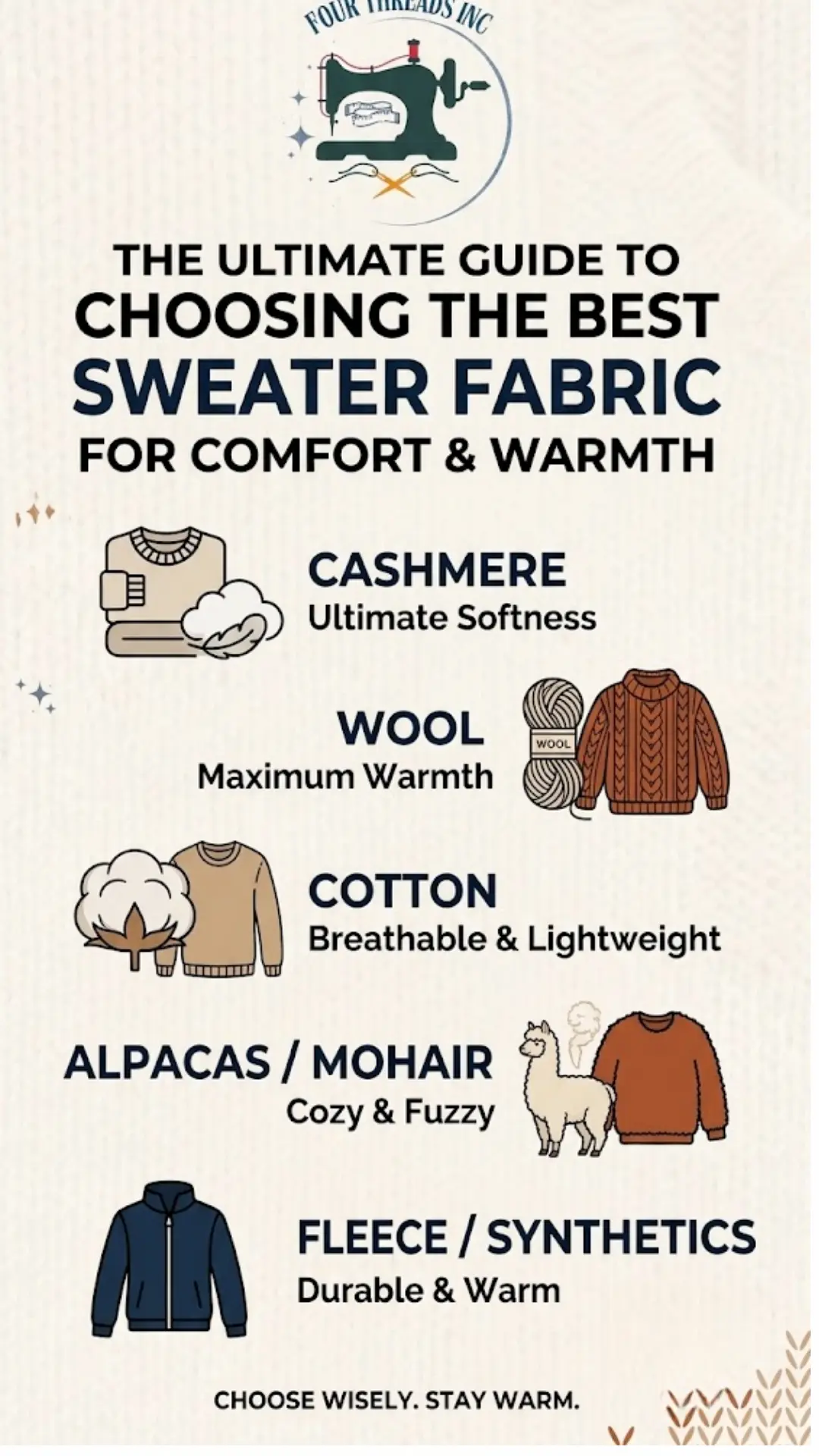
If you ask yourself what the best material for sweaters to keep you warm is, more than likely you will think of wool, and for good reason. Wool is a natural protein fiber derived from sheep.
This makes it the top choice for winter wear in cold climates, in particular during the harsh winters of North India.
Merino Wool: The Soft, Non-Itchy Champion
Traditional wool is often considered itchy. Merino wool addresses this issue. Its fibers are much finer and softer than those of regular wool, making it comfortable to wear directly on the skin without causing irritation. It also brings effective temperature regulation and manages moisture well.
Lambswool vs. Shetland: A Comparison of Wool Types
Warm and soft. Not all wool is created equal. Lambswool, from the first shearing of a lamb, is the softest and warmest, while Shetland wool comes from hardy Shetland sheep that produce warm, hardwearing, and less-smooth wool.
Luxury Sweater Materials: Cashmere, Alpaca, and More
Luxury fibres are what you would pay for; beyond wool there are other fibres, from other animals, that are in the luxury bracket due to their softness, warmth, and cost.
Cashmere and Mohair: Unmatched Softness and Luster
Cashmere (from cashmere goats’ undercoat) is renowned for being feather-soft and very warm. Mohair (from the Angora goat) is celebrated for its lustrous sheen, fluffy texture, and softness. Both can be combined with silk or wool to make premium luxury sweaters.
Alpaca and Angora: Hypoallergenic and Fluffy Options
Alpaca wool is warmer than sheep’s wool, softer than cashmere, and naturally hypoallergenic, making it a fantastic choice for sensitive skin. Angora, from the Angora rabbit, is incredibly fluffy and warm, though it is often blended with other fibers because its loose structure can cause shedding.
Best Fabric for Winter in India: Cotton and Other Plant Fibers
In the more temperate winter climates like Bengaluru or Mumbai, even heavy wools will be too much. This is where plant-based fibres and their blends are mainly good. They add insulation without making you sweat.
Cotton and Terry Cloth: Breathable Comfort
Cotton is soft, breathable, and hypoallergenic, making it ideal for layering in cool (not freezing) weather. Terry cloth, with its looped pile, is absorbent and cozy, often used in sweatshirts and casual sweaters.
Bamboo and Linen: Sustainable and Lightweight
Bamboo fabric is very soft, lightweight, and breathable with natural heat regulating properties. With a crisp feeling for summer, Linen can be mixed with cotton or wool for lightweight sweaters for the transition seasons.
Synthetics and Blends: Durability and Affordability
Extra materials – Synthetic fibers like polyester, acrylic, and nylon are occasionally included in the sweater cloth material mixture to increase strength, lower price, and help the sweater hold its shape. These fibers are not as insulating on their own as natural fibers are but they make a great addition to a fiber blend.
The most common and best mixture is that of 80 percent wool and 20 percent nylon. Such a mixture can maintain the warmth of the wool and at the same time, nylon adds strength and will help you take away pilling, which is caused by small pieces of material balling together. And you’ll get a sweater, which will last.
At Four Threads Inc we believe designing a great sweater is equal parts art and science. We have set out to bring you the best blend of knit sweater material so that whether the Delhi winter or mountain evening, you’ll be warm, comfortable, and always stylish.
Final Checklist for Choosing Your Perfect Sweater Fabric
- For maximum warmth: use 100 percent wool, merino, or cashmere.
- For Sensitive Skin: try a blend of cashmere, merino, alpaca, or the best cotton.
- For Warmer Climates: Cotton, bamboo, or a light wool blend.
- For Wear: Wool blends with 20-30% nylon or acrylic.
- For Easy Care: Acrylic/Cotton blends are frequently washable in machines.
So there you have it, choosing the right sweater starts with choosing the right fabric. Find a fabric that suits the environment you’re in, your body type, and your lifestyle, and you’ll have pieces you’ll never want to take off for years to come. Four Threads Inc proudly produces sweaters that you will want to keep in your closet for years to come.
FAQs
The best sweaters will have thick, high-loft wool such as Shetland, or a chunky wool blend. Sweater style: a close-knit turtleneck or a turtleneck with a beefy cable-knit pattern will deliver more warmth than a loose-fitting crew neck.
In general, animal fibers are the best for warmth. Wool is the most available and warmest, then luxury ones like cashmere, alpaca, mohair. These fibers have enough natural crimp to trap air for insulation.
The surest method is to look at the care label to determine what fibers are present. If the label is marked “100% Wool” or “Pure Wool, ” then you have your answer. It’s also possible to do a simple burn test on the fiber if it is loose — don’t do the test if the garment will remain in your wardrobe!
Cashmere and alpaca are known as the softest sweater materials. You could also consider inexpensive but relatively soft materials like high-quality merino wool and good quality cotton.
Leave a Reply