Enter a professional kitchen in India, and straightaway you’ll recognize that a fundamental piece of apparel that every cook, chef, and waiter is wearing is an apron. But, take a closer look, and you’ll find that no two aprons are completely alike. Reports reveal that the global apron market is expected to experience steady growth, mainly due to the expansion of the food and hospitality sectors. Alone in India, the restaurant sector has a workforce of over 7 million people, and almost always, all of them change into an apron when starting their work.
In reality, the idea is quite straightforward. Different works call for different kinds of aprons. A chef who cooks at a tandoor, for example, needs an apron that covers his torso fully, but a barista working on lattes is more concerned with wearing a light and fancy apron. A cobbler mending shoes would need a durable, thick material, whereas the lady at an upmarket salon would prefer an apron that matches her professional image.
This article thoroughly details the major categories of aprons available today, illustrates what each style has been intended for, and assists in identifying the apron that most suits your purpose. Whether you are opening and preparing a restaurant kitchen in a city like Bangalore or simply seeking an apron for your personal use, the content provided here serves you well.
What Are the Different Types of Apron and Their Classifications?
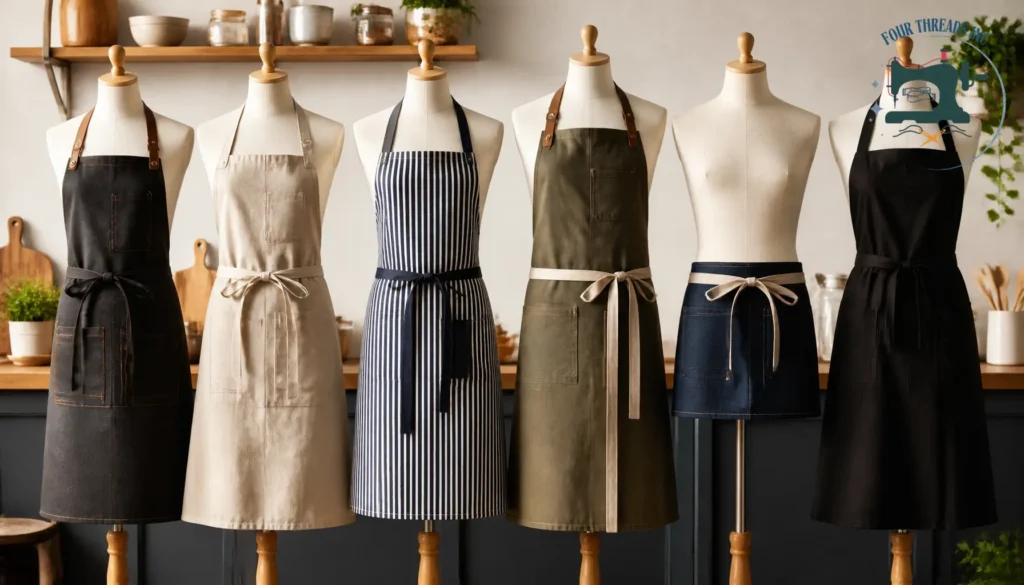
Miscellaneous varieties of aprons can be quite intimidating, but after realizing that basically each apron is either from the waist apron category or the bib apron family, the matter is simplified a lot. Other styles are derived by blending or modifying the two fundamental styles. Getting to know these groupings is an initial move for making a choice wisely.
The Two Main Apron Families
1. Bib Aprons (Full Aprons)
Bib aprons consist of a piece of fabric in front that covers the body from chest down to legs or even lower. It is kept in place either by a neck strap or cross-back strap. This particular style of apron is quite protective and ideal for kitchen workers as it covers the whole body, which helps in preventing the clothes from getting stained by the grease and food they are dealing with. The bib part is meant mainly for shielding against splashes of grease and food spills.
2. Waist Aprons (Half Aprons)
Waist aprons are only the front piece extending from the waist down, covering a person’s lower part, and are tied around the middle. They are light, comfortable, do not limit movements, and are a common choice by the waiting staff, the latte artists, and those working in shops where they have to get their hands on the tools very often. Although they offer less protection than those from the family of bib aprons, they give more freedom of movement and they look quite laid-back.
3. Specialty Aprons (Derivatives and Hybrids)
Different variations of the basic bib and waist designs have led to various specialty aprons – cobbler aprons with buttons at the side, pinafore aprons with crisscross straps at the back, bistro aprons with extra deep pockets, and aprons made from paper for hygienic reasons. Each one of them has a particular purpose while also relying on some fundamental features either of the bib or waist apron.
These categories not only help identify what kind of apron is being referred to but also make it easier and faster for you to narrow down your options based upon a given situation. If you seek complete coverage, choose bib aprons. But, if your major concern is the ease of movement, then waist apron styles shall be more suited to your requirements.
Different Types of Apron Styles for Every Profession and Purpose
We have now arrived at the basic classifications, and let’s continue examining the varieties of apron styles available and also determine the reasons why each particular style has its own characteristics. The choice of a suitable type of apron is dependent entirely on one’s job or working environment, the degree of protection needed against hazards, and the wearer’s preference or demand for long-term comfort and wearability during work shifts.
Types of Cooking Aprons and Kitchen Aprons
This setting calls for aprons with some special features because you will have to handle heat, grease, and spilled liquids besides walking around all the time. In these situations, protecting one’s body from these elements is the first and foremost need besides durability.
1. Chef Aprons
Chef aprons are the benchmark in an elite kitchen. Their designs include bibs with total chest coverage, usually made of durable, heavy cotton or poly-cotton blends resistant to heat and staining. Many chef aprons have large double front pockets that can hold various kitchen tools (e.g., thermometers, knives, and cutting instruments), pens, and small gadgets. In India, professional chefs are often seen dressed in chef aprons with logos or embroidery patterns of food chains.
2. Bistro Aprons
Bistro aprons are generally waist-style aprons where the front and back parts meet at a single point. These kinds of aprons are long enough to cover up the thigh or even reach the knee. Usually, they come with big patch pockets that sometimes have compartments to keep the order pads, pens, and the change machine. Cafés and casual dining outlets use these types of aprons for their staff because they allow easy identification while enabling maximum movement.
3. Server Aprons
Server aprons are small, simple versions of bistro aprons, and they are more meant for the front-of-the-house staff working in food service establishments. Server aprons are usually designed with plenty of pockets, and the layout of the pockets has been worked out in such a manner so that it is convenient for the wearer to get hold of whatever item they might be holding at any given moment with minimum effort.
Besides that, such aprons, when worn for restaurant service, give the wearer a professional but still neat-looking appearance while the design is so practical that it allows even the least flexible movements to go without being stopped altogether.
4. BBQ Aprons
BBQ aprons are made for grilled outdoors meals. They are very sturdy pieces of clothing, usually made of flame and heat-resistant materials like leather or even cotton duck for heavy-duty jobs. Many BBQ aprons have convenient loops on the edges and back parts, on which you can hang a set of cooking utensils like tongs and spatulas or even a set of towels. Also, some BBQ aprons have bottle openers added for convenience purposes, so that one may have a cold beer while enjoying the food together.
A good-quality cotton apron without pockets is the choice of Indian homemakers when they are cooking for their families on a daily basis. The fabric has to be one that can be washed very often without shrinking or losing colour or any other characteristics.
Apron Materials and Fabrics – What Works Best?
The characteristics of your apron for strength, comfort, or even the way it is taken care of are dependent upon the material with which you choose to make your apron. The performance of one apron differs from that of another not only due to the fabric but also because of the environment in which they are used.
The first step towards making better use of this information is to understand the fabric characteristics better by comparing them with one another. Then you will know which kind suits your needs better. Mechanical properties and the fabric’s ability to breathe are only two examples of the factors that determine the level of suitability of a material to a particular type of task or activity.
1. Cotton Aprons
Cotton, a material so soft and gentle on the skin that it became a favorite for making aprons, and has been a staple for generations. Although it is not as durable as synthetic materials, cotton absorbs a lot of moisture, making it comfortable to wear even when working in the kitchen. Cotton aprons are the best choices for home cooking as well as in small-scale businesses because besides their affordability, they are comfortable to wear too.
2. Canvas and Denim Aprons
Canvas and denim aprons are heavy-duty products, so quite strong and not easy to tear. So, they are suited for workshops, woodcutting, and factory work. The fabrics will develop an aged look over time through repeated use, that is valued by many artisans and craftspeople.
3. Poly-Cotton Blend Aprons
A blend made up of poly and cotton gives aprons a bit of both worlds: the softness of cotton and the strong and resistant characteristics of polyester. These aprons are less likely to get wrinkles than other garments made out of the same fabric, they dry pretty quickly and keep their color even after going through frequent industrial cleaning processes. Poly-cotton blends work well for hotels and restaurants since they wash aprons quite regularly.
4. Leather Aprons
Leather aprons are good insulators against heat, sparks, and heavy dust particles, making them a common wear among professional welders, blacksmiths, and leather craftspeople. Of course, leather is pretty costly. Still, a well-kept leather apron can last for several years, and the unique look it develops over time suits many professionals.
5. Waterproof and Disposable Aprons
Waterproof aprons from PVC or other coated fabrics are necessary in the fish markets, food processing places, restaurants, and the likes that deal with high moisture levels. Plastic disposable aprons are widely used by hospitals, salons, and food handlers for hygiene and the prevention of cross-contamination reasons.
How to Choose the Right Type of Apron for Your Work
The picking out of your apron doesn’t just rely on whether it matches your wardrobe. The right apron for your job will have to be selected based on the work environment, the hazards your job brings along, and how you feel when wearing the apron for several hours per day.
1. Recognize Your Work Environment
Firstly, you should be clear where your apron will be worn. The kitchens where you will be working need aprons with protection against both heat and stains. Hair salons need lightweight, attractive, and fashionable aprons. For a workshop, the best choice would be materials resistant to abrasion so they do not wear out quickly. The workplace is the first determining factor to consider in everything else.
2. Choose the Right Material
Different fabric types can be appropriate based on your type of work. In your case, if you are working with open fires, you definitely will need aprons made of fire-resistant materials. If you wash your apron every day, then a poly-cotton blend will stand up to the washing better. You still cannot go wrong in choosing cotton if you are a very comfort-oriented kind of person.
3. Decide Between Bib and Waist Style
One of the decisions you have to take on aprons is whether to pick a bib type or a waist apron. Bib aprons are more protective and that makes them suitable for working with messy stuff. Waist aprons, however, give much more freedom of movement, which will suit you very well if it is just about being of service to your customers. You should find that middle point where protection meets freedom of movement.
4. Consider Functionality and Comfort
A good apron should have several functions like adjustable neck straps, waist ties, and enough pockets, etc. For those working lengthy hours, the weight load distribution across shoulders or neck is a very important aspect of comfort so that one’s neck and shoulder muscles are spared from pain. If your pockets need to be used without bending, then positioning it so is the solution.
5. Match Your Brand Aesthetic
For companies, the colours and designs of the aprons may have a major part to play in how well customers will see and identify their brand. Custom embroidery is often a service offered by uniform manufacturers, for instance, so one can have her or his logo placed on the aprons. All your team in the same outfit shows a level of professionalism that your customers will surely pick up on.
Quick Checklist for Choosing the Perfect Apron
Before you buy, this brief list should enable you to check off everything very quickly:
- Is your current apron suitable for the kind of work hazards you face every day?
- Is the material of the product fit for your surroundings and how often you are going to wear it?
- Are the straps adjustable so that you have a comfortable fit?
- Does it come with enough pockets for your tools, etc.?
- If required, can it be branded for your business?
- Does the fabric allow the sweat to escape to be breathable in the Indian climate conditions?
- If you look at the price tag, does it justify your planned expenditure and the anticipated use?
Conclusion
Getting yourself the perfect apron type is mainly about pairing the tool with a task. The chef needs full protection and covering; the server calls for a garment providing both freedom to move and enough space for tools. While at home, a cook should opt for a material easy to handle and a light garment. When you grasp different kinds of aprons and learn about materials used, you can take your choice wisely and benefit from it for quite a long time.
Should you be looking for high-standard aprons for your business in the country of India, Four Threads Inc could be your best bet as they offer an array of products that not only have very good materials to work for professionals but also have designs fitting for Indian weather.
FAQs
Bib aprons protect your entire upper body by covering your breasts up to your knees. Waist aprons only cover your abdomen, and you tie them around the waist. Bib aprons, being more of an all-out option, are great for messy cooking. Waist aprons, in comparison, allow greater freedom of movement for service-based jobs like waitressing.
In such cases, the aprons made of poly-cotton blend are recommended as they do not allow stains to be seen, dry fast even in very humid weather, and are washable very often. Yet, cotton aprons are the right choice for casual use at home as these are not only breathable but also a cheaper alternative.
It is generally a good idea to have each employee three aprons in total – one for them to wear while they are working, one that is being washed, and another that is kept as a reserve. In this way, regardless of the rush, the restaurant won’t lack clean aprons.
Disposable coveralls are the ones intended as single-time-use garments for those who deal with very critical hygienic environments like a lab, food service area, or hospital. On the contrary, for daily kitchen works, it is much better to use the reusable fabric aprons which are the environmentally responsible option and save your money as well.
The answer is yes, many apron producers have a system for adding logos using embroidery machines, for example, which is one of the most preferred ways of personalization. Not only that, it can be an amazing way for your staff to get together wearing an apron with your logo – it’s really one of those things that create that identity.
2 replies on “The Ultimate Guide to Different Types of Apron Styles and How to Choose the Right One”