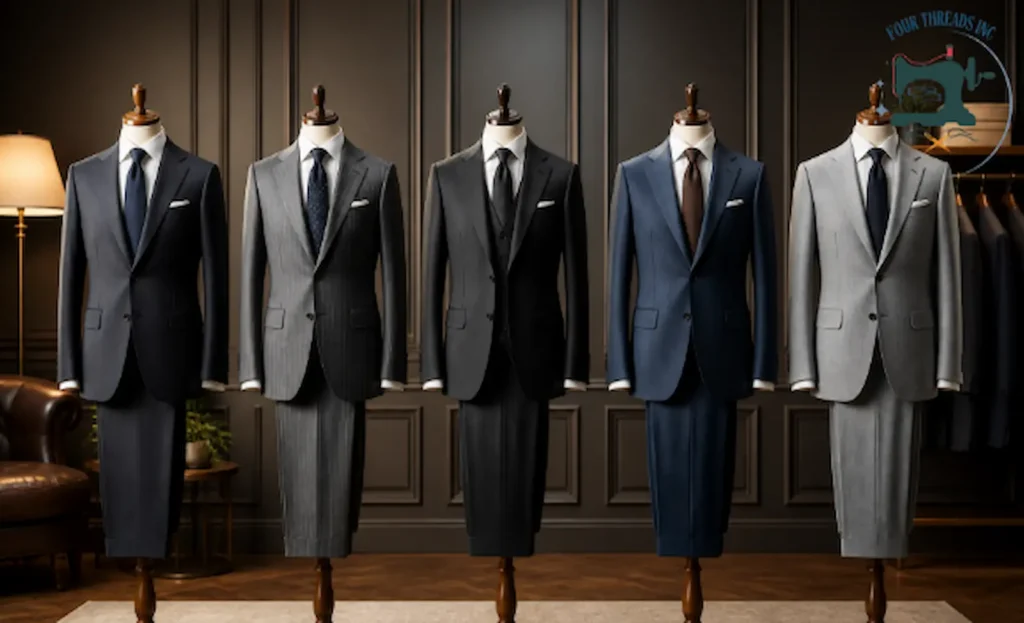
Walk into any boardroom in New York or the office of a law firm in London and the one thing you’ll spot? The business suit. Industry figures show the global menswear market is still seeing demand for formal tailoring, and suits have long been a cornerstone of the workplace wardrobe.
The right business suit can do more than just feel good to wear – it can help you feel good in general – and it’s an art form that can signal professionalism and respect to anyone you come into contact with. Whether you’re gearing up for interviews, meetings, or just want to give off the right professional vibe, knowing what makes up a proper business suit is key, and this handy guide will fill you in on everything from the anatomy of a business suit to the various styles and how to make the right choice.
What Is a Business Suit?
A business suit is a matching set of clothing (often a jacket and slacks of the same material) worn in a formal or semi-formal professional environment. While separates are common in casual wear, when it comes to business suits, the defining feature is that the jacket and slacks are a matching set—matching in fabric, colour, and pattern.
What Are the Different Pieces of a Suit Called?
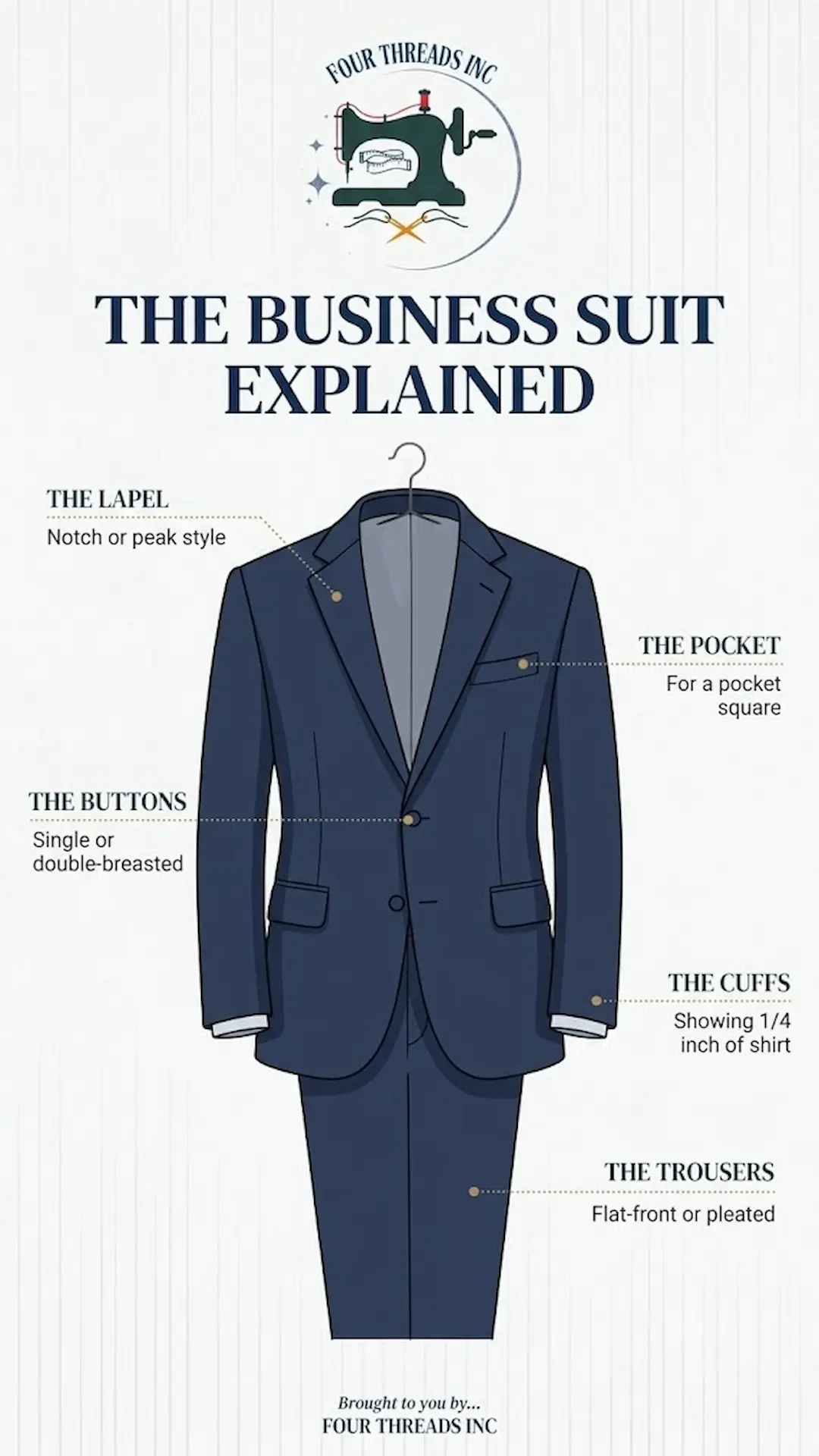
Once you have an understanding of a Business Suit Anatomy, it will be easier to know what you are looking for when shopping! The Business Suit consists of a jacket and matching pants – but each part plays a role.
1. Jacket: this is the main item of clothing in a men’s professional suit and has notch, peak, or shawl lapels, a breast pocket and buttons. It will have hand-sewn sleeve lining and good venting (double or single) in the back for ease of movement.
2. The Trousers: Matching trousers are available in flat-front or pleated styles. The ‘break’—where the hem meets the shoe—can be full, half, or none, given your preference and the height of your shoes. Vented pleats and a clean waistband are indicators of good construction.
3. The Waistcoat (Optional): The three-piece suit features a waistcoat to make it more formal and to keep the wearer warm. Waistcoats are a frequent feature of the British tailoring tradition.
4. The Shirt and Tie: a smooth shirt, with a spread or point collar, is worn with a silk tie. The spread of the collar should be appropriate for the jacket lapels (peak = wider spread – notch = narrower spread).
5. Oxford shoes are considered the most formal option, with derbies and loafers being slightly less formal. A leather belt that matches the shoes, plus a pocket square and cufflinks, completes the outfit.
Having this knowledge of the parts of a suit allows you to evaluate quality and fit before you buy.
Why Are Suits Seen as Professional?
Suits and professionalism are historically and psychologically linked. The modern business suit emerged out of 17th century European court dress and has slowly become the formal costume of merchants, bankers, and politicians. By the 20th century the business suit had become the formal uniform of commerce.
The very shape of the suit, with its clean lines, conservative colours—navy, charcoal, black—invoke the same sense of confidence and trustworthiness. Psychological research on the psychology of dress has shown that people who wear formal clothing are perceived as more competent and trustworthy. As a result, “power dressing” is still a thing in the workplace.
A black business suit is linked to authority and is commonly chosen in legal and executive environments. Navy and charcoal suits are regarded as more approachable while maintaining credibility, making them practical options for everyday use. The consistent appearance of the suit minimizes distractions, directing attention to the wearer’s words and actions instead of their attire.
What Are Different Kinds of Suits?
The world of business suits for men extends beyond a single style. Different cuts, fastenings, and regional tailoring traditions offer options for various body types and occasions.
| Type | Description | Best For |
| Single-breasted | One row of buttons – classic and versatile | Most business settings |
| Double-breasted | Overlapping front with two rows of buttons – formal | Executive roles, evening events |
| Slim fit | Closer cut through chest and waist | Modern, lean silhouettes |
| Regular/Classic fit | Roomier through torso and sleeves | Comfort-focused wearers |
| Tailored fit | Between slim and regular – balanced | Most body types |
| Italian (Neapolitan) | Soft shoulders, minimal structure | Warm climates, relaxed elegance |
| British (Savile Row) | Structured shoulders, defined waist | [Formal corporate environments](https://fourthreadsinc.in/designed-for-work-styled-for-success-why-corporate-uniforms-matter/) |
| Mandarin/Nehru | Stand collar, no lapels | Cultural or semi-formal events |
Does Professional Business Attire Require a Suit?
Not necessarily. What makes up business attire has changed over time, mostly in technology or creative fields. Business formal still needs a suit, mainly in law, banking, and consulting. But, business casual allows blazers, dress shirts, and chinos without matching trousers.
A man goes in a formal suit for interviews and client meetings. The safest option. A suit works most of the time in a face-to-face situation, like in India, full suits are common in senior positions but less so in tech startups. Know if you have to suit up or can go casual.
How to Choose the Perfect Business Suit
With business suits it’s all about fit, fabric, and construction. You’ll want a good tailor in your corner, but there are some things to look for that will help you make informed choices.
1. Give attention to the shoulders: your shoulders are the anchor for your suit. They need to sit flat and finish where your natural shoulder line begins – everything else is an easier fix than adjusting your shoulders.
2. Select Quality Fabric – Business suits are made from worsted wool, which is the fabric of choice because it is very durable and resists wrinkling. Breathability of a wool for warm weather comes in the form of high-twist wool and textured weaves provide visual interest.
3. Think about fabric practicality: how often will you wear this? In all weather? A mid-weight cloth (roughly 260-300 gsm) can be worn year round in most locations.
4. Go Slimmer Than You Think: Contemporary styles lean towards more fitted. That jacket should feel like it’s skimming the body without feeling tight, and those trousers should taper, but not cling.
5. Mind the Details: the number of buttons, the width of the lapel, and the vent style should all be dictated by your style as well as the purpose of the suit. A hand-sewn chest pocket and sleeve lining will tell you a lot about the quality of the suit.
Building a Versatile Suit Wardrobe
Every functional wardrobe begins with one or two high quality suits that are perfect fit and in neutral colours. Navy and charcoal are the most adaptable, appropriate for interviews, business meetings, or to wear at more formal occasions.
As time goes on, add seasonal fabrics and styles — a textured grey blazer for business casual, double-breasted suit for CEO. Don’t fall for rookie errors like buying trendy cuts that go out of style or neglecting fit for designer labels.
Final Checklist for Choosing a Business Suit
- Match the jacket and trousers in colour and fabric.
- Prioritise shoulder fit above all else.
- Choose worsted or high-twist wool for strength.
- Choose navy or charcoal for versatility, black for command.
- Check trousers have a good break over shoes.
- Combine with a crisp shirt, tie, and Oxford shoes.
- Make adjustments to fit with an investment.
Conclusion
A Business Suit is an Essential part of your professional wardrobe. A professionally tailored business suit is not just clothing, it is your secret weapon to success in the professional world. Learn the basics of a business suit, the right fit, the best styles, and the different types of suits so you can confidently appear prepared for any business environment.
Whether you are looking for a professional suit for men or an upscale special occasion look, Four Threads Inc has expertly tailored suits that reflect craftsmanship and style.
FAQs
Suits are considered professional because they have historically been tied to authority figures and their structured, uniform appearance. The matching jacket and trousers signal discipline and attention to detail, while muted colours like navy and charcoal project trustworthiness. Psychological studies also suggest that formal attire boosts perceptions of competence.
Suits vary by fastening (single-breasted, double-breasted), formality (business, dinner, morning), cut (slim, regular, tailored), and regional style (Italian, British, American). Each type is suited to different occasions and body types, from the versatile single-breasted lounge suit to the formal dinner suit.
Not necessarily. It’s common for other professions such as finance or law to be more formal and require a suit. Creative industries and technology companies tend to be more casual, but a suit is always the safer option for interviews and client meetings.
A suit consists of a jacket, matching trousers, and optionally a waistcoat. The jacket features lapels, buttons, and pockets, while the trousers have pleats and a hem. Accessories like shirts, ties, belts, and shoes complete the outfit.
3 replies on “Business Suit Explained: A Complete Guide to Styles, Fit, and Professional Uses”