
If dressing well is an art, having a suit that fits is a game changer. The most effective tools you have when walking into a business meeting or interview are your clothes. Your first impression is made within the first few seconds of a new encounter, so a well-tailored suit immediately asserts that you know what you are doing – even before you say a word. A well-fitted business suit is a must-have in your personal business kit. Here’s our guide to suit fitting.
What Does the Perfect Business Suit Fit Look Like?
Getting that ‘just right’ business suit fit is about a couple of checks for the suit jacket, and also in the trousers. It’s not about donning the tightest possible outfit – but that perfect outline, which falls smoothly over the contours of your body and promotes your proportions.
This begins with covering those essential fit zones: from shoulder breadth to waistline, the right fitting suit will work in harmony with your contours. When trying on a suit, watch the fabric carefully; if the fabric pulls tight or the shape appears simply to slide off your shoulders, then you’re not quite on point. But then a well-figured, good-fitting suit can make a difference in a competitive business environment.
Key Fit Zones to Check for a Flawless Finish
1. The Shoulders
- The shoulders are the most important part of the suit. Your jacket should drape smoothly over your shoulder and not roll forward or hang away from your shoulder. If the seams are in front of your shoulder then the coat is too wide, and if they aren’t at the edge then it’s too narrow.
2. The Chest and Waist
- The jacket should button comfortably without pulling at the chest, which would otherwise create a lapel bowing effect. The waist should have a slight suppress, creating a clean V-shape from the chest, and you should be able to comfortably slide your hand beneath the jacket’s fabric at the waist. A trimly cut suit may require that you move up a size to find a good fit, while a generously cut suit may fit you at your normal size.
3. The Sleeves
- Sleeves of your jacket should end at your wrist bone. You should be able to see about a half-inch of your shirt cuff. Sleeves should be long enough to cover your shirt, but not so long that they cover your hands or so short that your shirt cuffs show a lot. The length of the sleeve should just reach the top part of the thumb, just below your wrist.
4. Jacket Length
- An old standby – the jacket needs to be long enough to cover your entire bum. Standing with arms relaxed at your sides, the jacket hem should hit you in the middle of your hands and gently arch up over your bum.
5. The Trousers
- Your trousers should set the shape of your overall silhouette. To achieve the classic look, they should just have one break on the top of your shoe. For the fashion-forward look, they should stop at the top of the shoe and taper from there with no break.
How to Choose a Business Suit?
You are getting a suit. But it’s not only for the measurements; colour, fabric, and construction have to be carefully selected to meet the requirements of your vocation and your personal style. If you’re buying your first real business suit, the more conservative the better.
A navy or charcoal grey suit in a sturdy wool fabric is ideal and will be appropriate for every business function. It’s your backdrop for success. Besides the basics, think about how you will wear your suit. A good tip: invest in a two-pant suit; it not only gives you an extra pair of trousers, but also extends the life of your jacket set—saving you money over time.
Understanding Fit Tolerance: Too Big vs. Too Small
It is a common question: should you buy a suit that is a bit too large or one that is a bit too tight? The answer is almost always to choose the larger size. A suit that is too small is very difficult, and often impossible, for a tailor to adjust, since there is no extra fabric to work with.
In contrast, a suit that is slightly too big is much easier for a tailor to alter. They can slim the waist, shorten the sleeves, and taper the trousers without trouble. Alterations are a standard part of purchasing a suit and should be anticipated. A tailor can adjust a bigger suit to fit you well, but they cannot add fabric to a suit that is too small.
The 5-Suit Rule and Building a Versatile Wardrobe
The “5-suit rule” is not a mandatory law but a useful guideline for building a professional and versatile business wardrobe. This concept suggests that a well-rounded collection consists of five distinct suits, each serving a slightly different purpose, providing ample rotation to extend the life of each garment.
It is also important to never wear the same suit pants two days in a row. The fabric, mostly wool, needs time to breathe and recover its natural shape. This simple habit of suit rotation prevents premature wear and tear.
You could have a basic wardrobe of a navy and a charcoal suit, which may be worn for most of the work week, a lighter colour like a blue or grey for more casual business styles, a patterned suit to add some individuality, and a tuxedo or dinner suit for formal dinner function evenings.
Common Suit Fitting Problems and How to Fix Them
Even when shopping carefully, you might encounter common fit issues. To recognize these, look for the following signs:
- If the jacket is too short, it may look like a trendy cropped jacket, which is usually not appropriate for a formal business setting.
- If you notice lapel bowing or a pinstripe chest fit problem, it usually means the chest is too tight.
- Another common issue is when trousers don’t fit correctly; be cautious with tailoring, as wearing different shoes can affect the proper length. Shoes really impact trouser length. A good tailor can fix most of these issues, so a fitting session with an expert is important.
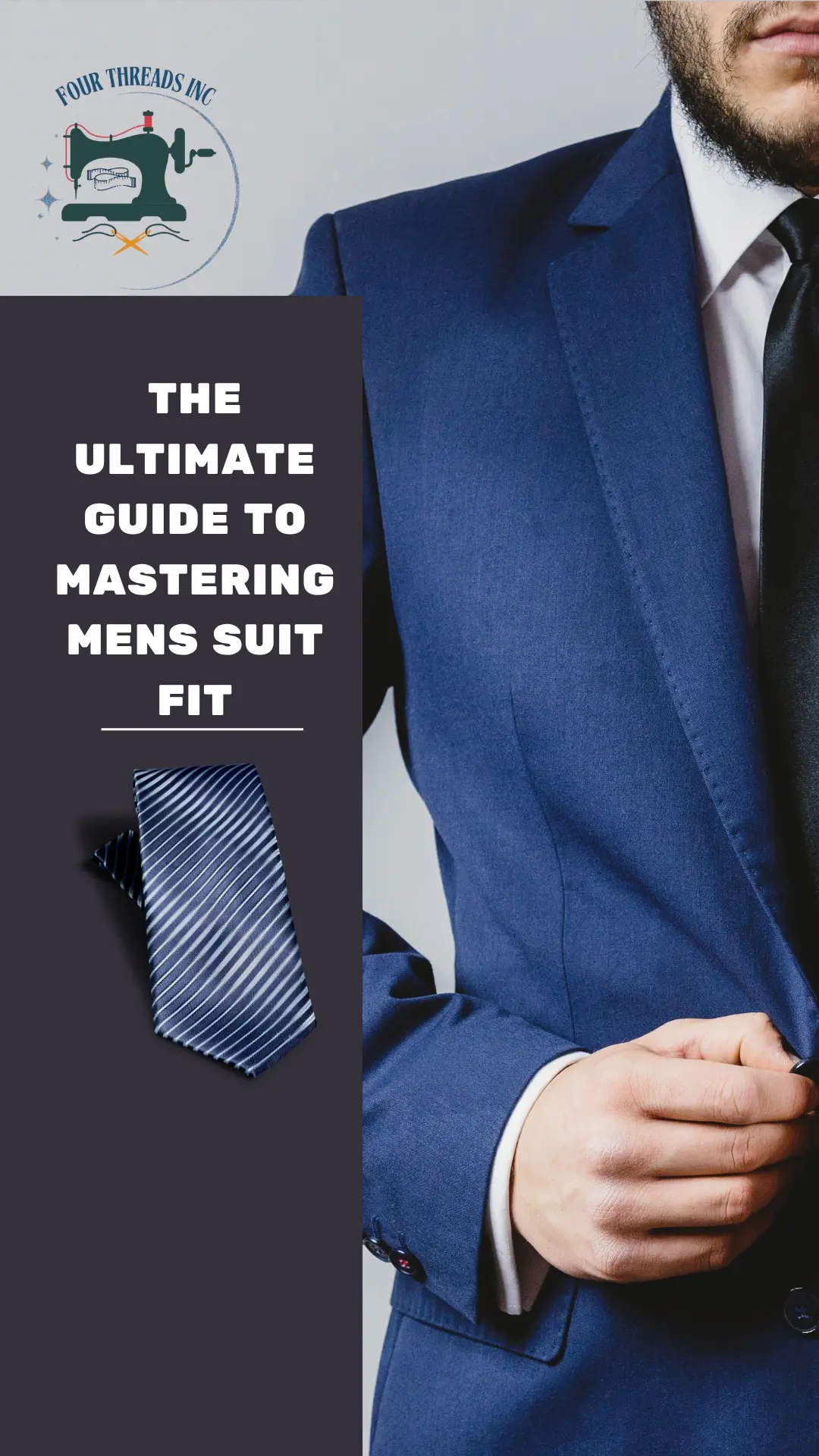
Final Checklist for a Perfect Suit Fit
Is this the right option for you? Something to think about before you buy:
- Shoulders: The jacket shoulders should be flat and smooth.
- Jacket Closure: The jacket buttons easily without pulling.
- Cuffs: You should be able to see just half an inch of your shirt cuff.
- Jacket Length: The hem should curve below your backside in a smooth, natural line.
- Pants: Desire a pristine drape in pants with a slight or no break at the hem.
So, a perfect business suit fit is the perfect harmony between the science and art of body measurements and tailoring principles. It is an investment that returns confidence and a commanding professional presence.
At Four Threads Inc, we specialise in crafting and tailoring men’s suits that are not just a perfect fit, but a true reflection of your individual taste, ensuring you are always prepared to make the right impression.
FAQs
The fit should be clean across the shoulders, with a chest that can be comfortably filled out and a waist that is softly tapered. Sleeves should fall just at the wrist bone and the jacket should sit comfortably below the seat. Trousers should lie smoothly and normally with a slight break at the shoe.
The 5-suit rule is a guideline for building a versatile wardrobe. It suggests having five distinct suits in rotation: two business suits (classic navy and/or charcoal), one for social events, one patterned suit, and one special or evening suit. This ensures you have the right attire for any occasion.
Getting a suit that is a bit too loose is preferable. A tailor can make a loose suit smaller with adjustments, but not the other way around if the suit is too tight. Always prioritize the fit of the shoulders, as this is the hardest area to alter.
Leave a Reply